We often tend to think of international cooperation in terms of projects: grant applications, consortia, deadlines, and reports. In reality, however, well-functioning partnerships rarely fit this logic. Rather, they are relationships that develop slowly, built on shared experiences, mutual trust, and a long-term perspective.
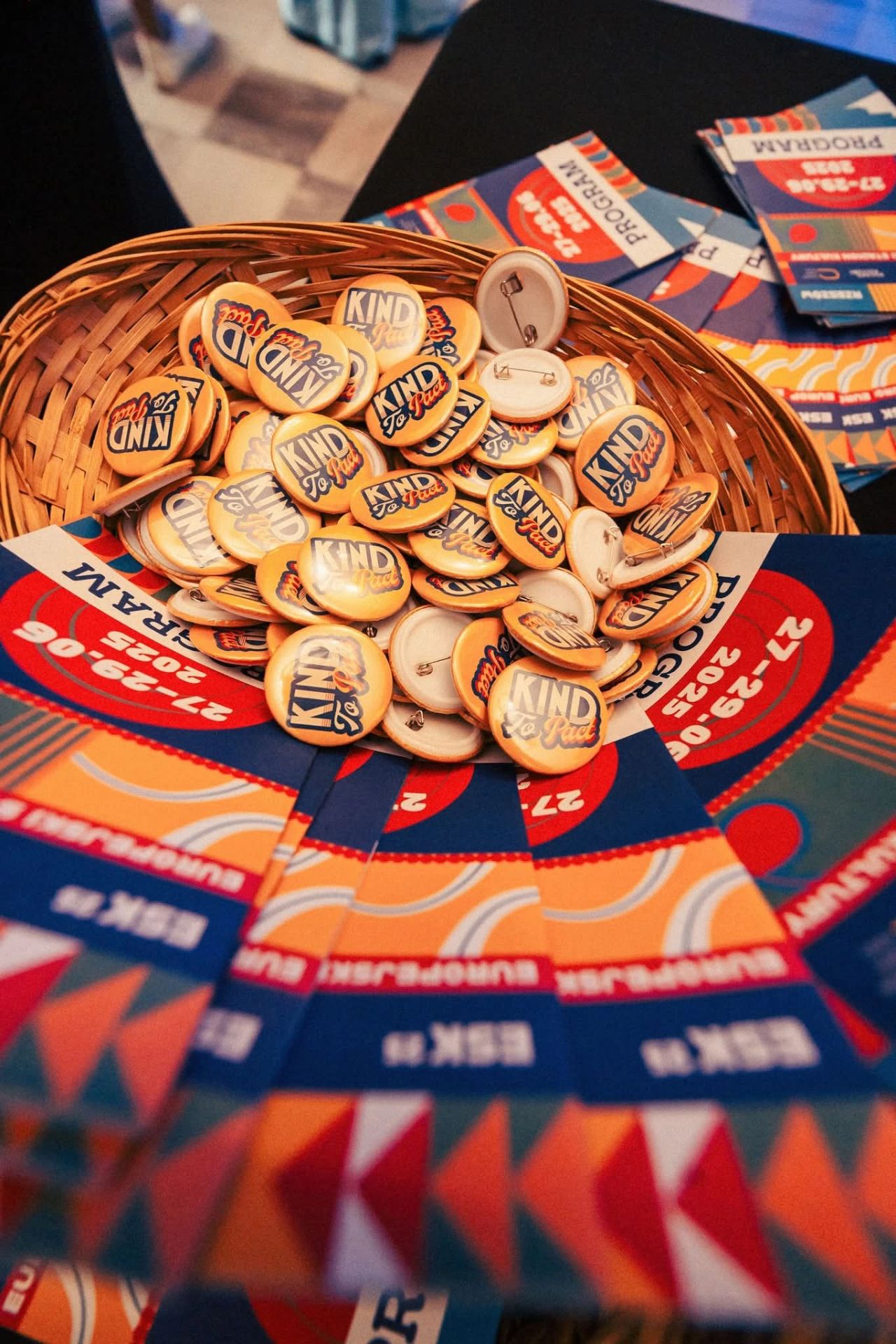
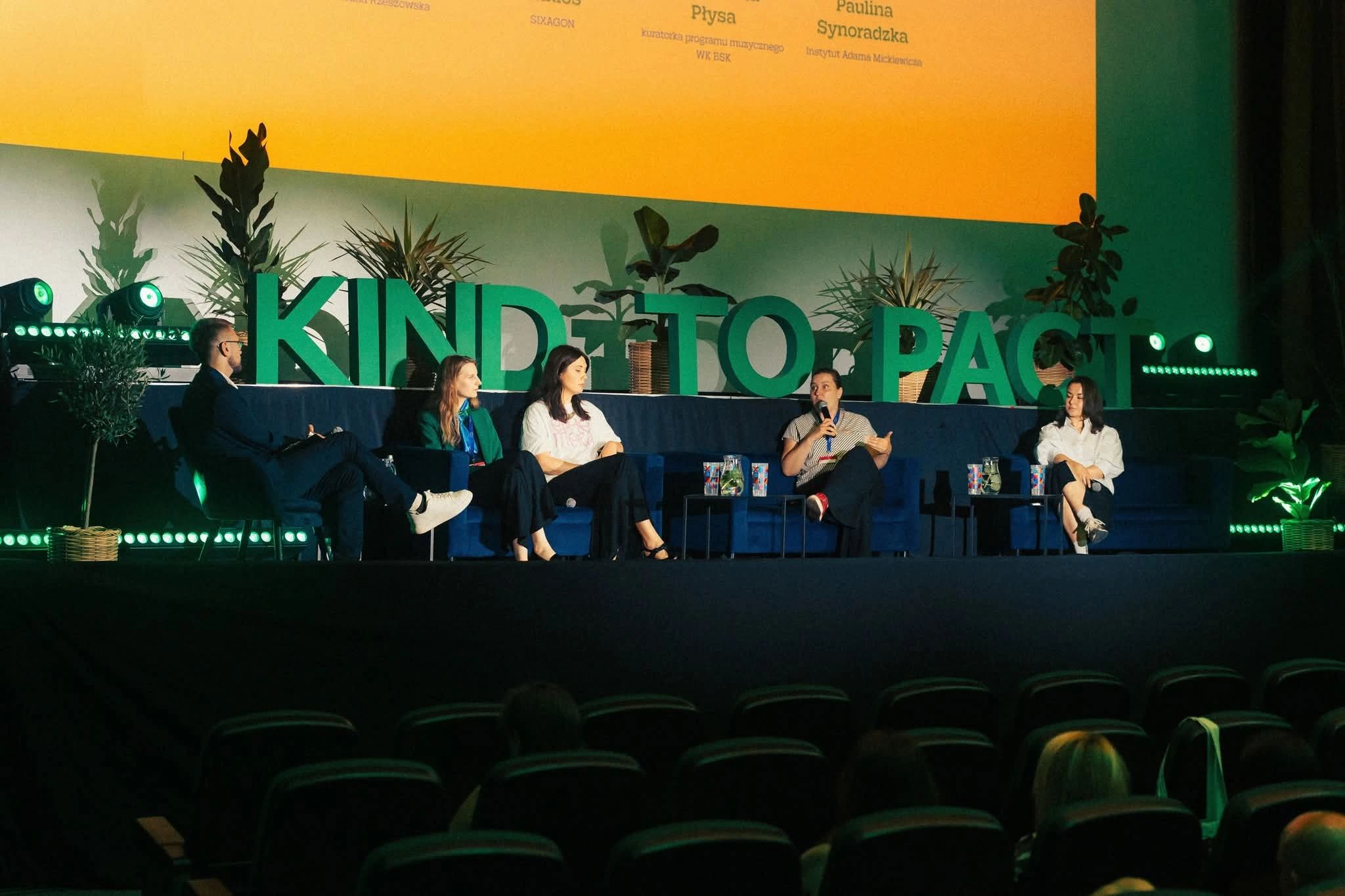
This perspective was reinforced by the Kind to Pact panel discussion in Rzeszów (Poland), organized by Estrada Rzeszowska as part of the European Stadium of Culture 2025 festival. The event focused specifically on international collaborations, building partnerships, and the practical workings behind consortium-based projects — addressing the question of what makes a collaboration functional not only in form but also in substance.
How is a good partnership built?
Our colleague, Eszter Miklós, also participated in the discussion, sharing her personal experiences regarding the nature of partnerships. As she put it: “In a great setting and inspiring company, we discussed, among other things, whether personal connections or shared interests are the stronger driver in a partnership, why international collaborations should be viewed as a long-term endeavor, and what criteria to use when seeking and finding a partner.”
These questions may seem simple at first glance, yet they fundamentally determine the success of a collaboration. Experience shows that partnerships rarely begin on a purely professional basis, and rarely remain at the level of purely personal relationships. The two can reinforce each other: shared interests and goals provide direction, while personal trust provides stability.
Why doesn’t it work in the short term?
One important lesson from the discussion was that we often underestimate the time dimension in international collaborations. A well-functioning partnership is not built over the course of a single grant cycle. In fact, it is often precisely the periods between projects when real relationship-building takes place: when the parties learn from one another, realign their expectations, and develop the shared modus operandi upon which they can later consciously build.
During the panel, Eszter Miklós also emphasized that “in the best case, a partnership is not a challenge to be solved or a burden, but an opportunity for the efficient and sustainable sharing of expertise and resources.” This approach is particularly important in the case of cultural and creative sector projects, where resources are often limited, yet impact can only truly be achieved through collaboration.
The example of the Rzeszów-Debrecen partnership
For SIXAGON, the partnership with Rzeszów is a good example of how such a collaboration takes shape. Previous partnerships between cultural institutions in Debrecen and Rzeszów had already laid the groundwork, which was later further strengthened by the Visegrad Art Market project. These processes do not happen overnight, nor are they linear, but it is precisely this that makes them lasting.
The Future of International Partnerships: Collaboration as a Strategic Resource
Both the Kind to Pact panel and the European Stadium of Culture events demonstrated that the true value of international collaborations is not measured by the number of projects, but by their ability to establish long-term relationships. Relationships in which participants not only work together but also develop shared ways of thinking. Thank you to Estrada Rzeszowska for the invitation and the collaboration!