

What do we mean by social innovation? Do we even need it as a separate category, or does all innovation create social impact in some way? These questions are not only intellectually engaging, they also carry real practical weight for those working on systemic change.
SIXAGON was inspired to take part in the Social Innovation Exhibition and Fair, held on November 6, 2025, as part of ELTE Innovation Days and organized by the ELTE Innovation Centre. The event sparked meaningful dialogue among professionals on the role and future of social innovation.
Where does social innovation begin?
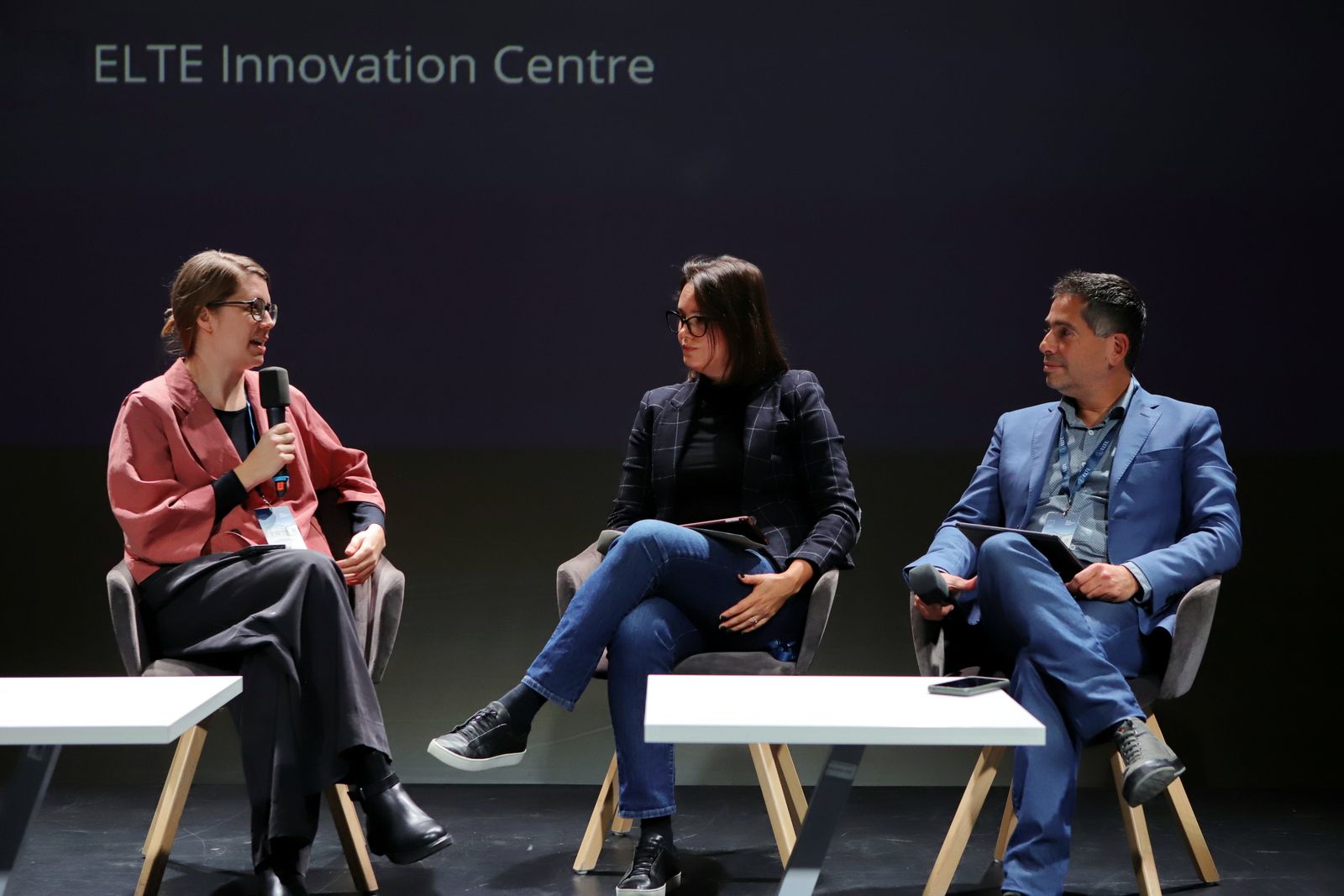
One of the most engaging panel discussions was moderated by our Executive Director, Péter Gemza, who also serves as a social innovation manager at the ELTE Innovation Centre. The panel featured Dániel Magyar, Director of the ELTE Innovation Centre, Bram van Eijk, Executive Director of the One Family Foundation and Gergely Böszörményi-Nagy, founder of Brain Bar and Chair of the Board of Trustees at the Moholy-Nagy University of Art and Design.
A central question of the discussion was whether all innovation can be considered social innovation, or whether the term should be reserved for solutions that generate a positive social impact. No clear-cut answer emerged and perhaps that is exactly what reflects the dynamic nature of the field. What is clear, however, is that social impact is increasingly seen not as a byproduct, but as an intentional outcome.
Impact measurement or impact management?
Our partners also contributed to the “Social Impact Measurement and Fundraising” panel. Gábor Lévai, founder of Scale Impact, and Eszter Drevenyák, Manager of EIT Community Hub Hungary, highlighted that measuring social impact alone is not enough.
Instead, the focus should shift towards impact management: a process in which organizations not only measure but actively shape their impact. This is particularly relevant in the nonprofit sector, where operational constraints often make structured, long-term impact development more challenging. The discussion made one thing clear: managing impact consciously is a strategic priority, not just a reporting requirement.
A national-level perspective: the Portuguese example
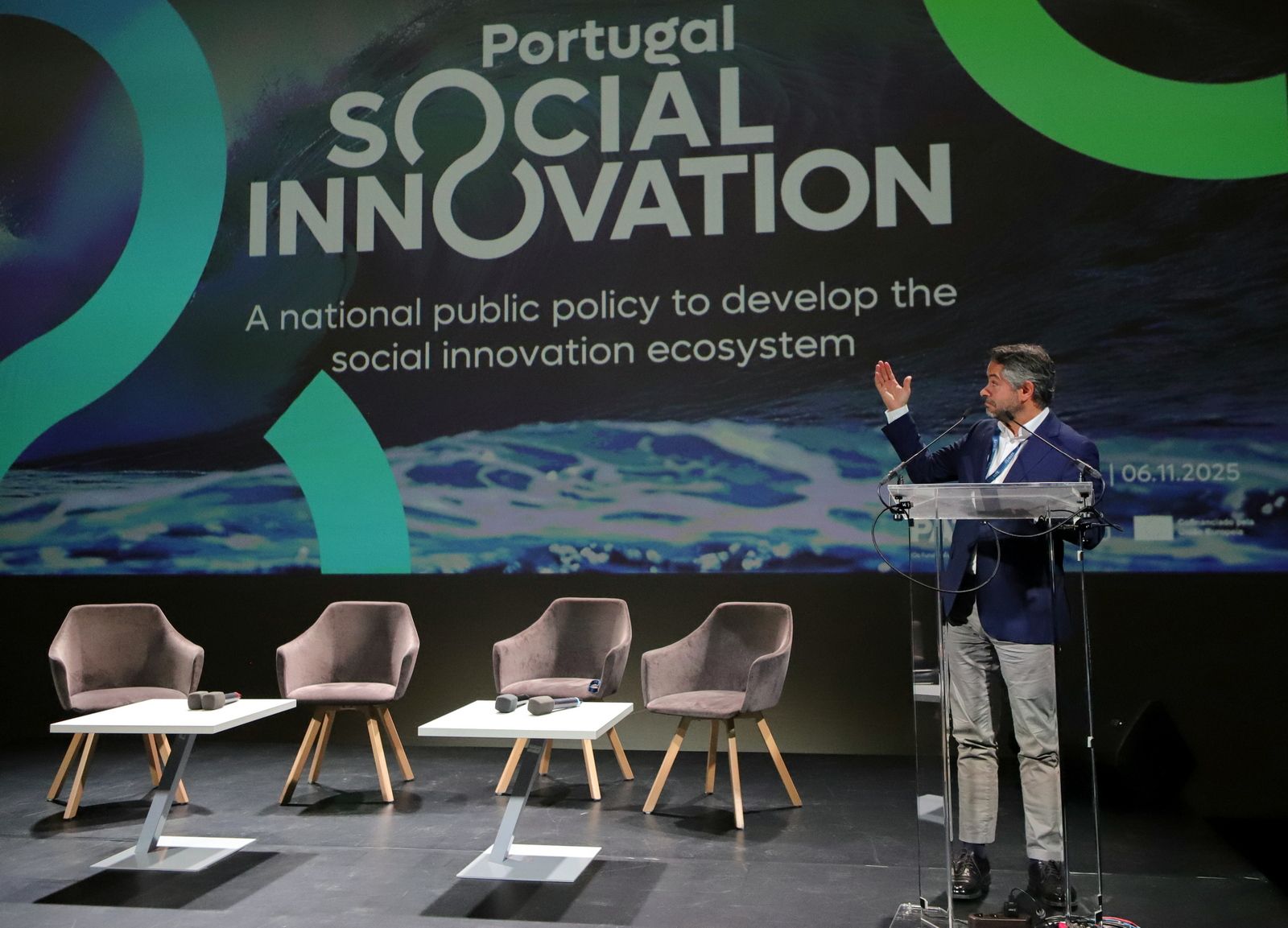
One of the most inspiring presentations at the event was delivered by Filipe Almeida, head of the Portugal Social Innovation agency, who shared insights into the development of Portugal’s social innovation ecosystem. His talk clearly demonstrated that social innovation can only truly scale when it is supported at the institutional level. A dedicated national organization, a clear strategic direction, and targeted funding can drive systemic change. This approach also sends a strong message to the Hungarian ecosystem: if we take social innovation seriously, it must be addressed at a strategic level.
More than an exhibition
The Social Innovation Exhibition and Fair was more than a professional event, it was a meeting point. A space where higher education institutions, nonprofits, companies, and decision-makers could come together to exchange ideas and perspectives. For SIXAGON, the event reaffirmed that social innovation does not emerge from isolated projects but from collaboration. Platforms like this create the conditions for different perspectives to meet and for those encounters to evolve into tangible, real-world solutions.
What do we take away?
Perhaps the most important takeaway is that social innovation is not a clearly defined field but a mindset. An approach that seeks to address root causes and builds solutions at a systemic level. The question is no longer whether it is needed, but who is truly able to embed it into their own operations.

